Rocket AI Email Generator

Designing an AI-assisted flow that helps sales teams build automated, personalized outreach campaigns quickly, removing the frustration of manual setup.

Empathize

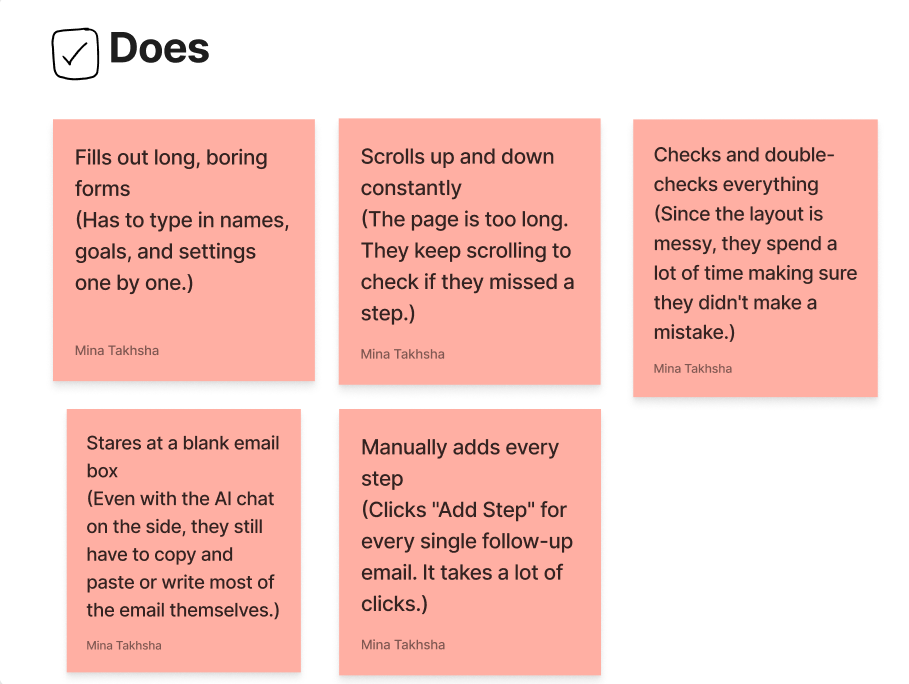
I started by looking at who I was designing for: Sales Development Reps (SDRs), Account Executives, and busy Startup Founders. Through the provided research, a clear pattern emerged. These users know automation is valuable, but they hate setting it up. Making a sequence from scratch (adding step one, setting a timer, adding step two...) feels confusing and takes way too much time. They are trying to close deals, but instead, they are stuck fighting with software that feels like a complex spreadsheet.

Empathy Map

I created an empathy map to visualize the user's pain points. This helped me identify the main barriers to a fast and successful workflow.
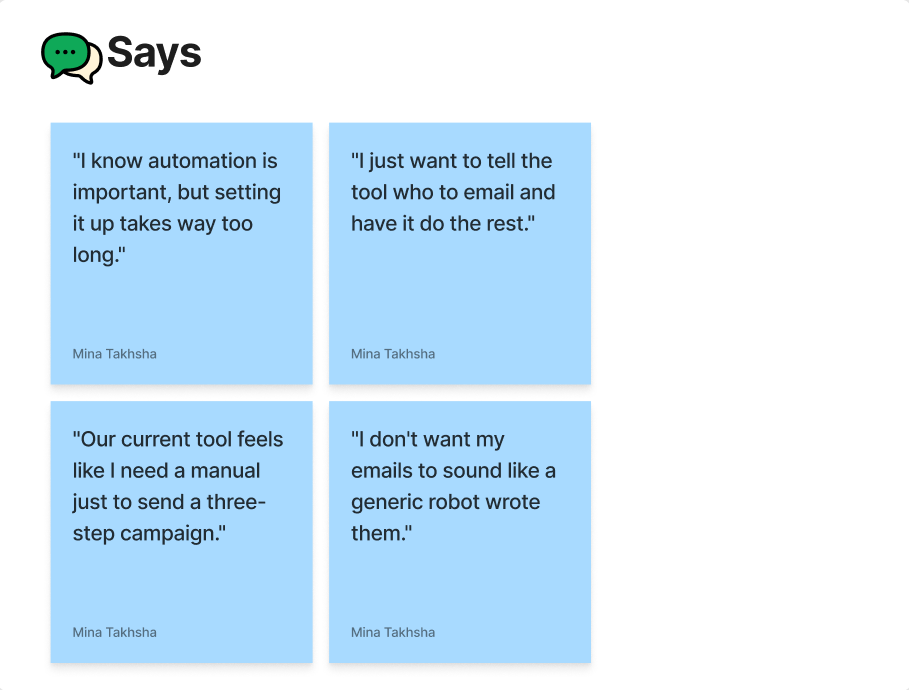
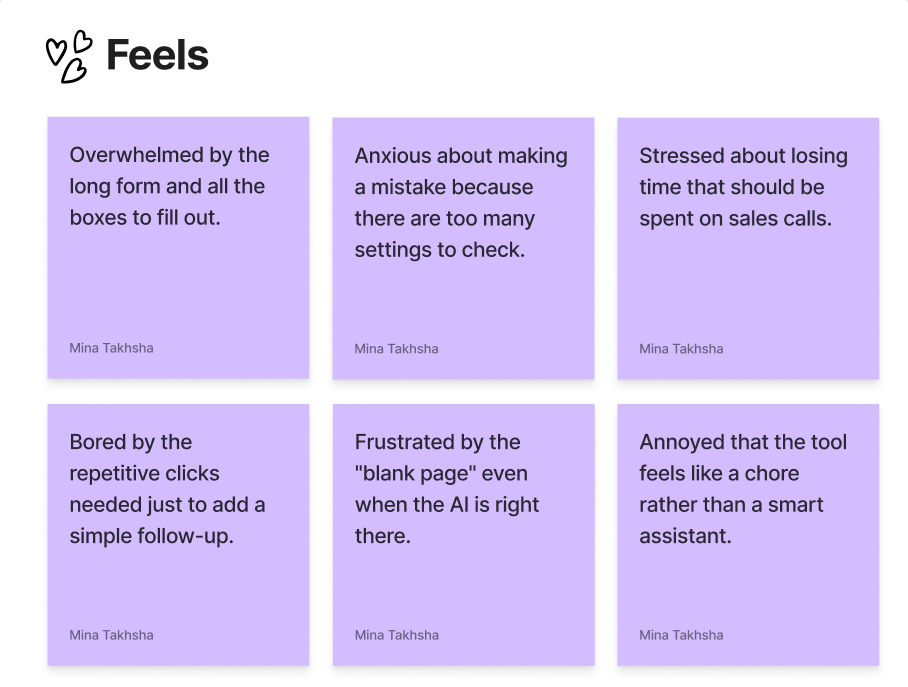
Empathy map-saysEmpathy map-feelsEmpathy map-DoesEmpathy map-Thinks

Insights

After looking at the empathy map, I realized the problem wasn't just a "messy UI"—it was a workflow problem. Users were forced to be "builders" when they just wanted to be "salespeople."

Priorities & Opportunities

By grouping the user's behaviors and frustrations, I found the most important needs to focus on for the design.

Affinity map
Affinity map

Problem Statement

Current AI sales tools are built as complex spreadsheets with a chatbot on the side. Instead of being a partner, the AI is just a "side feature" that still forces users to manually fill out long forms and build every step from scratch. This makes the setup feel like a chore rather than a smart collaboration, causing "form fatigue" and slowing down the sales process.

The Challenge (How Might We)

HMW: How might we redefine sequence creation from a manual building process into an AI-led partnership, where the system handles the complex logic and personalization so users can move from intent to launch in seconds.

Ideation and Collaboration

To turn my research into a real solution, I held a brainstorming session with a Product Developer and a Product Analyst. We shared ideas and prioritized features that would be the most helpful for the user and easy to build.

Key Design Decisions:

1. AI at the Center:
We decided to move the AI from a "side-bar" feature and make it the center of the whole experience. The AI now leads the process from start to finish.
2. Automated Sequence Logic: Instead of asking the user to manually add follow-up steps, the AI automatically generates the entire multi-step journey. This includes the follow-up content and a "Smart Delay" (e.g., Wait 3 days) between steps. I designed these as interactive "Vertical Stack" elements so users can easily edit or adjust the timing on a single scrollable canvas.
3. Smart Tone Adjustment: We added a simple dropdown menu so users can quickly change the email tone.
4. Dynamic Actions: I designed "Call to Action" (CTA) dropdowns that suggest the best links or buttons based on the user's goal.
5. Auto-Language Detection: To help with global sales, the system now automatically suggests the correct language based on the receiver’s location.
6. Live Prospect Integration: In the right panel, the AI automatically finds and suggests leads that match the user’s prompt, removing the need for manual filtering.

Wireframe sketchProcess
Early Ideation: Layout and Sequence Logic

Design and Prototyping

Following the ideation phase, I translated my conceptual sketches into interactive Figma wireframes. This step was essential to bridge the gap between abstract ideas and a functional user experience.

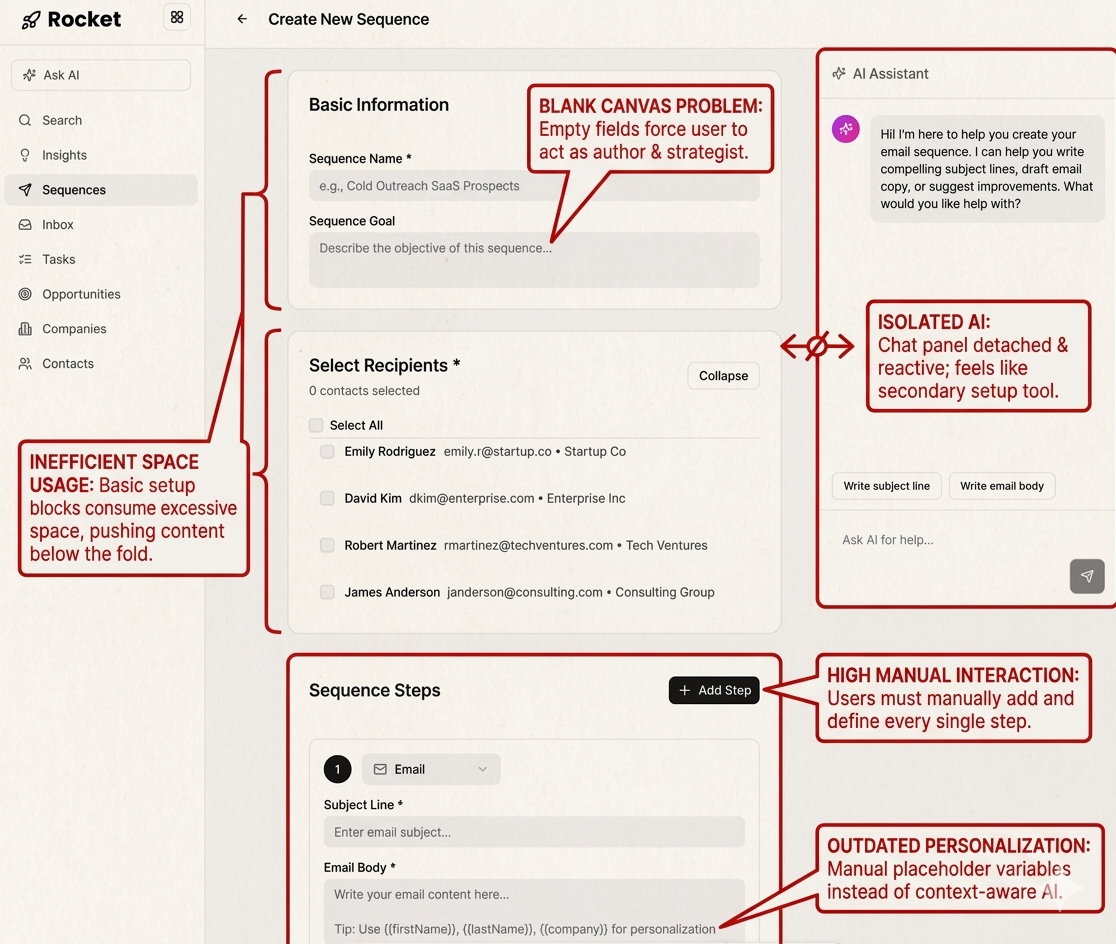
Old versionNew flow
The Legacy Interface
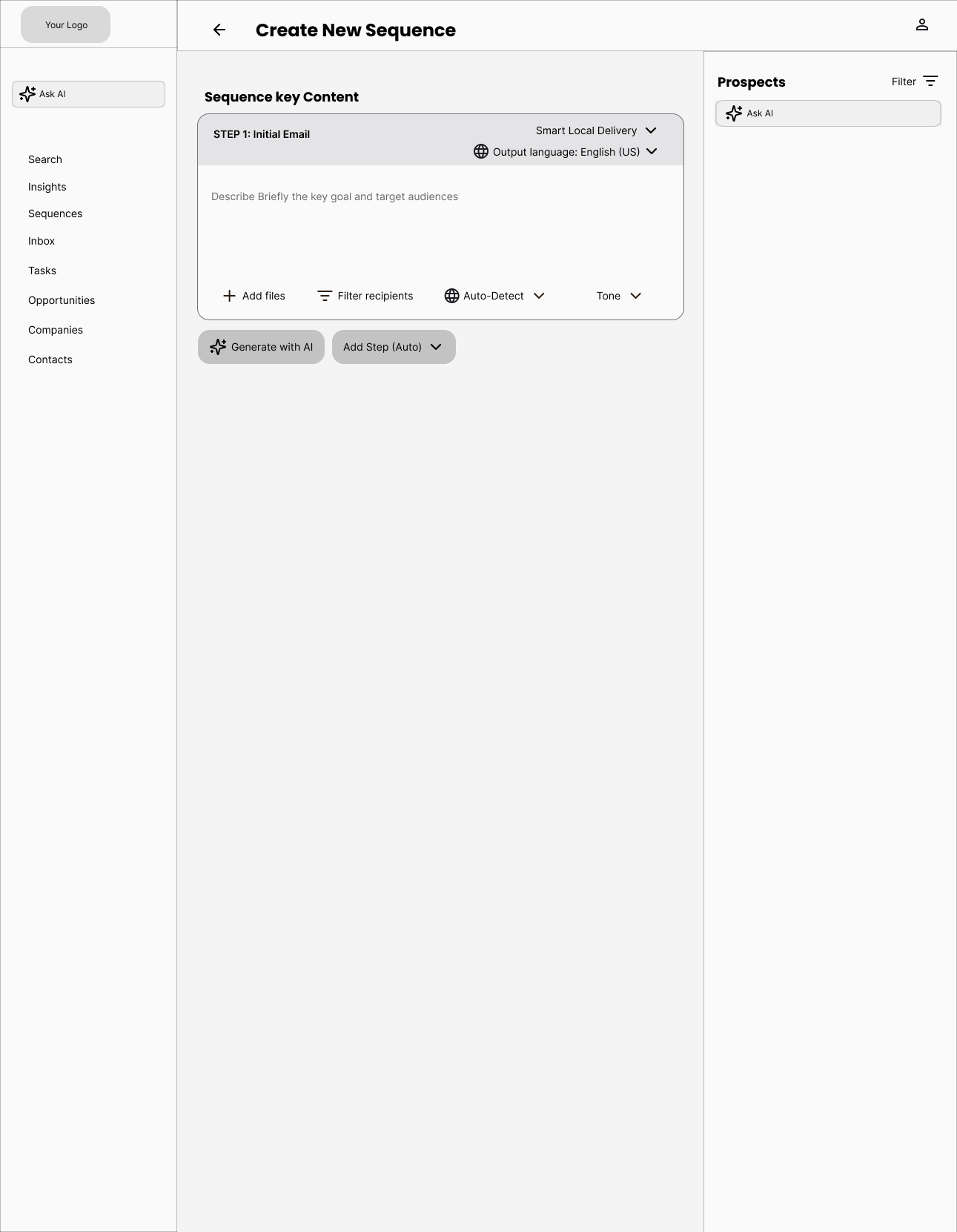
Optimized User Flow: AI-Driven Sequences
Wireframe - Create new sequence - frame 1Wireframe - Create new sequence - frame 2
The Intent-Driven Empty State
Managing Agentic Output

High-Fidelity Synthesis & Visual Polish

After validating the structural flow and interaction models through wireframe testing, I transitioned to high-fidelity design to establish visual trust. The core strategy was to reserve Spark Orange exclusively for AI actions and signals, creating a clear mental model of where the agent adds value. This design synthesis ensures that despite the high volume of contextual data, the final interface remains scannable and intuitive, moving stakeholders from a theoretical solution to a production-ready vision.

High fidelity - Create new sequence - Frame 1High fidelity - Create new sequence - Frame 2
High-Fidelity Empty State
High-Fidelity Agentic Output
Next project